Citation: Biddle, N., Chernyk, S., Sanhueza Petrarca, C., and Farthing, S., (2025) ‘Artificial Intelligence, False Information, and Electoral Integrity Perceptions’ Australian Resilient Democracy Research and Data Network Discussion Paper 12, Australian National University.
What does this matter?
Artificial intelligence (AI) is transforming how we create and consume information. From personalised political ads to deepfakes and synthetic news, it is reshaping the information ecosystem in ways that are both exciting and unsettling. As Australians went to the polls in 2025, questions about false information, AI, and trust in democracy loomed large.
How well did voters navigate this new landscape? And what does it mean for the integrity of future elections?
A new Australian Resilient Democracy Network paper, Artificial Intelligence, False Information, and Electoral Integrity Perceptions, uses nationally representative data from the 2025 Election Monitoring Survey Series (EMSS) to explore these questions. The EMSS followed Australians across four waves from October 2024 to May 2025, capturing how attitudes evolved before, during, and after the federal election campaign.
The results paint a nuanced picture: while confidence in the mechanics of Australian elections remains strong, many voters are increasingly anxious about the quality and reliability of the information they encounter, and about how emerging technologies like AI could shape democracy in the years ahead.
Key Findings:
1. Australians trust the process, but worry about the information
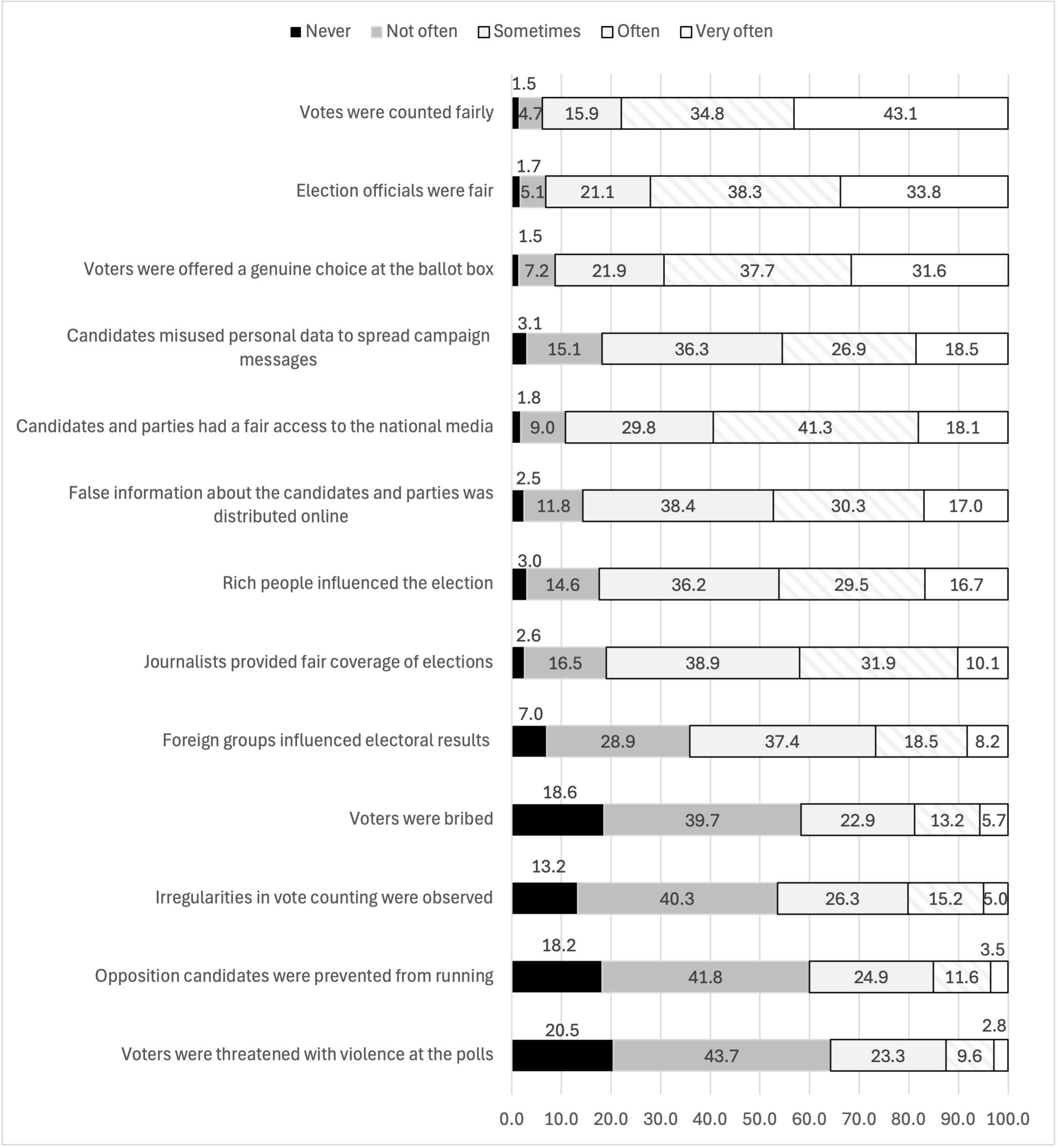
Australians continue to express high trust in the way elections are conducted. Around 78 per cent of respondents said they were confident votes were counted accurately, and three-quarters believed that electoral officials were fair and impartial. These are reassuring figures, much higher than similar data on electoral confidence recorded internationally.
But when it comes to the campaign information environment, the story is different.
Nearly half of Australians (47 per cent) said false or misleading information about candidates or parties was distributed online during the 2025 federal election campaign.
Perceptions of election conduct during the May 2025 election.
These perceptions matter as voters who reported higher exposure to misinformation were significantly less likely to express confidence in the fairness of the election.
2. AI familiarity brings more, not less, concern
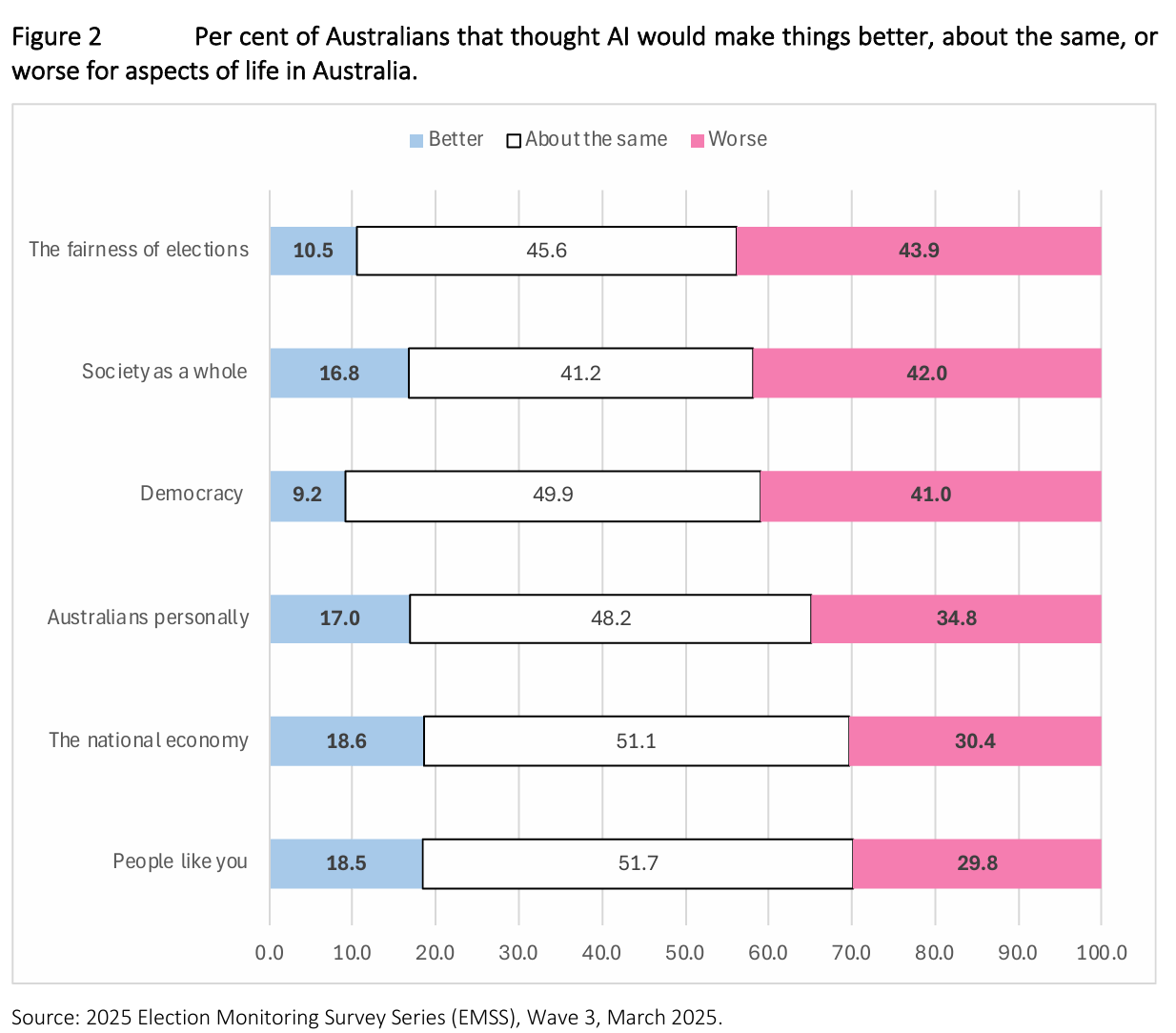
The rapid uptake of generative AI has sharpened these anxieties. Around 60 per cent of Australians said they were familiar with AI tools such as ChatGPT, and nearly one-third reported having used them. But, around 44 per cent of Australians thought that AI would make things worse for electoral fairness, compared to only a little over one-in-ten that thought it would make things better.
We drilled further into concerns that Australians had about Gen-AI, specifically with regards to democracy. Across seven possible threats, Australians are most concerned that AI would spread misinformation. In March 2025, 45.1 per cent of Australians were very concerned about this, with a further 38.9 per cent somewhat concerned. Only 12.9 per cent of Australians were not too concerned, with a very small 3.1 per cent not concerned at all.
While misinformation was the threat the highest per cent of Australians were concerned about, all seven potential threats had at least seven-in-ten Australians responding that they were either somewhat or very concerned.
Level of concern for different aspects of generative AI threats to democracy.
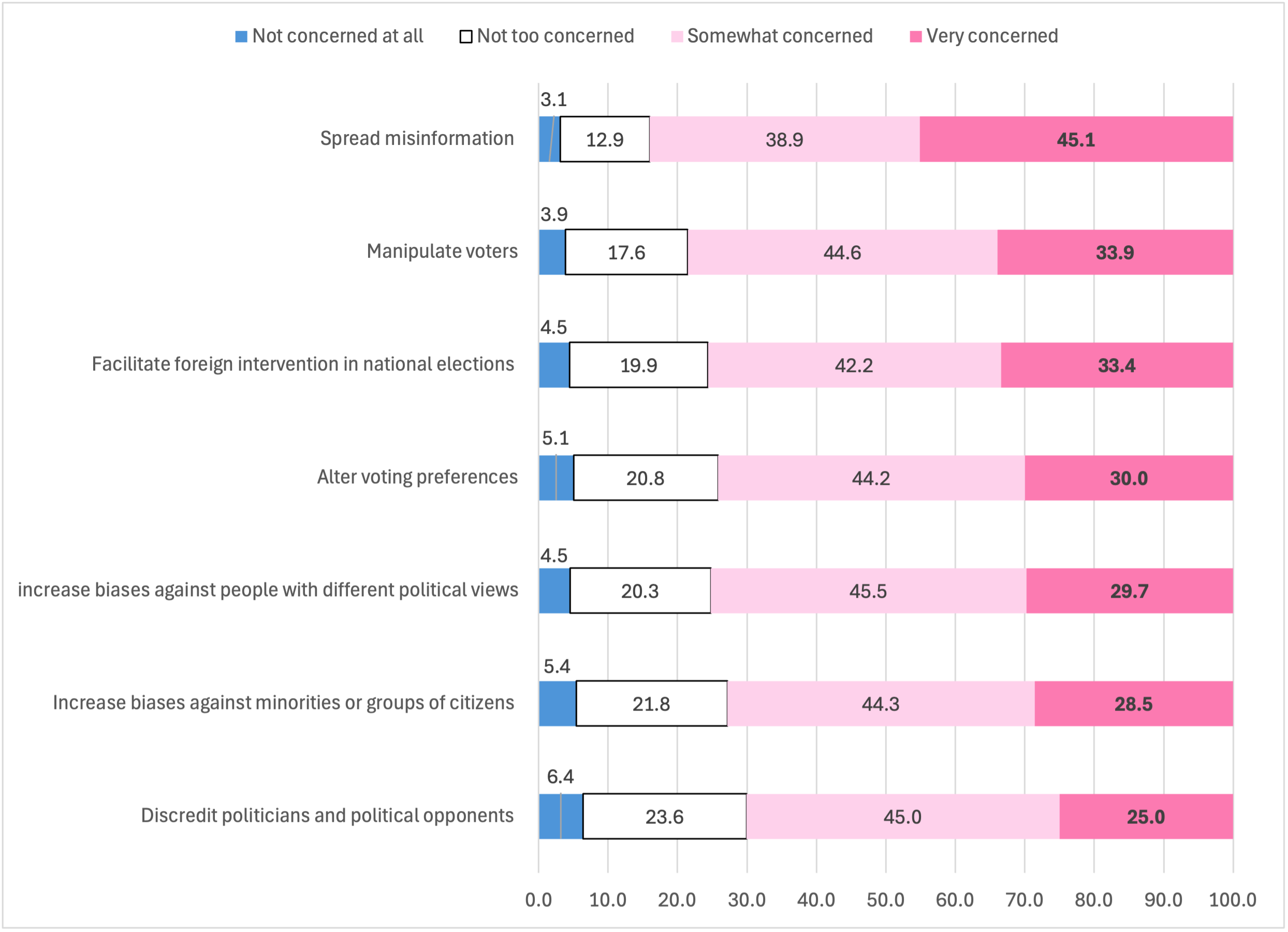
Familiarity with AI does not breed comfort. For example, 51.0 per cent of those that had heard a lot about Gen-AI were very concerned about it being used to spread misinformation compared to 42.4 per cent of those that had not heard a lot about AI.
4. Information integrity and democratic confidence
The relationship between perceptions of false information and broader democratic sentiment is clear.
Australians who believed that false information was widespread were 25 percentage points less likely to express satisfaction with democracy and 20 points less likely to have confidence in the federal government. The same pattern holds for those most worried about AI’s influence: higher concern correlates with lower trust in political institutions, even after controlling for partisanship, age, and education.
This erosion of confidence does not reflect declining support for democracy itself; Australians continue to value democratic governance overwhelmingly. But it does signal a shifting foundation of trust. Voters are less confident that democratic processes can keep up with the technologies that now shape their information environment.
5. Safeguarding electoral integrity in the AI era
Protecting electoral integrity in the digital age requires more than secure ballot boxes and transparent counting processes. It demands active management of the information environment that surrounds elections. This includes:
Strengthening public communication from trusted institutions like the Australian Electoral Commission (AEC);
Expanding digital and media literacy programs to help citizens identify false or AI-generated content;
Increasing transparency and accountability requirements for political advertising and algorithmic content distribution; and
Developing independent oversight mechanisms to ensure AI applications in political communication align with democratic values.
International experience shows that early intervention matters. Democracies that have invested in digital resilience through civic education, cross-platform monitoring, and open data collaboration are better positioned to maintain public confidence even as technologies evolve.
Looking ahead
Australia’s democratic institutions remain robust, and most voters continue to express faith in the integrity of elections. But confidence in information integrity such as the fairness, transparency, and truthfulness of the campaign environment is far less secure. As AI tools become more sophisticated and accessible, maintaining that confidence will become a defining test of democratic resilience.
The message from voters is clear: they still believe in the democratic process, but they need reassurance that it can adapt to a fast-changing digital world. Building that assurance will require collaboration between policymakers, technology developers, civil society, and researchers. It also requires an ongoing commitment to evidence-based monitoring of how Australians experience democracy in the age of AI.