

Who do you trust, and what gives you confidence in public institutions?
This question has been central to many recent political campaigns, most famously in 2004. Usually, it is asked about political leaders, parties, and institutions. But it is equally important to track how Australians consider the extent to which we trust not only institutions but each other. We also need to monitor the implications and timing of when this trust changes, and ensure there are no major differences between communities.
Building on some of the ideas shared in ARDN Discussion Paper 18, the ANUpoll has started to focus on the strength of inter-personal connections as a core factor in explaining democratic resilience. The initial findings, published by Australian Resilient Democracy Network members Nicholas Biddle and Matthew Gray, found that interpersonal trust has been declining, and this decline should be interpreted as warning signs for our democratic resilience.
Biddle, N., and Gray, M., (2026) Steady, but not recovering: Wellbeing, Democratic Attitudes, and Interpersonal Trust in Australia, June 2026
Key findings:
Wellbeing is steady, but not recovering. Life satisfaction remains low and optimism about Australia’s direction has not meaningfully rebounded, indicating continuing pressures on individual and collective wellbeing.
Satisfaction with democracy continues to decline, but longitudinal data suggests falls have been smaller for younger Australians and degree holders, and larger for the rest of the population
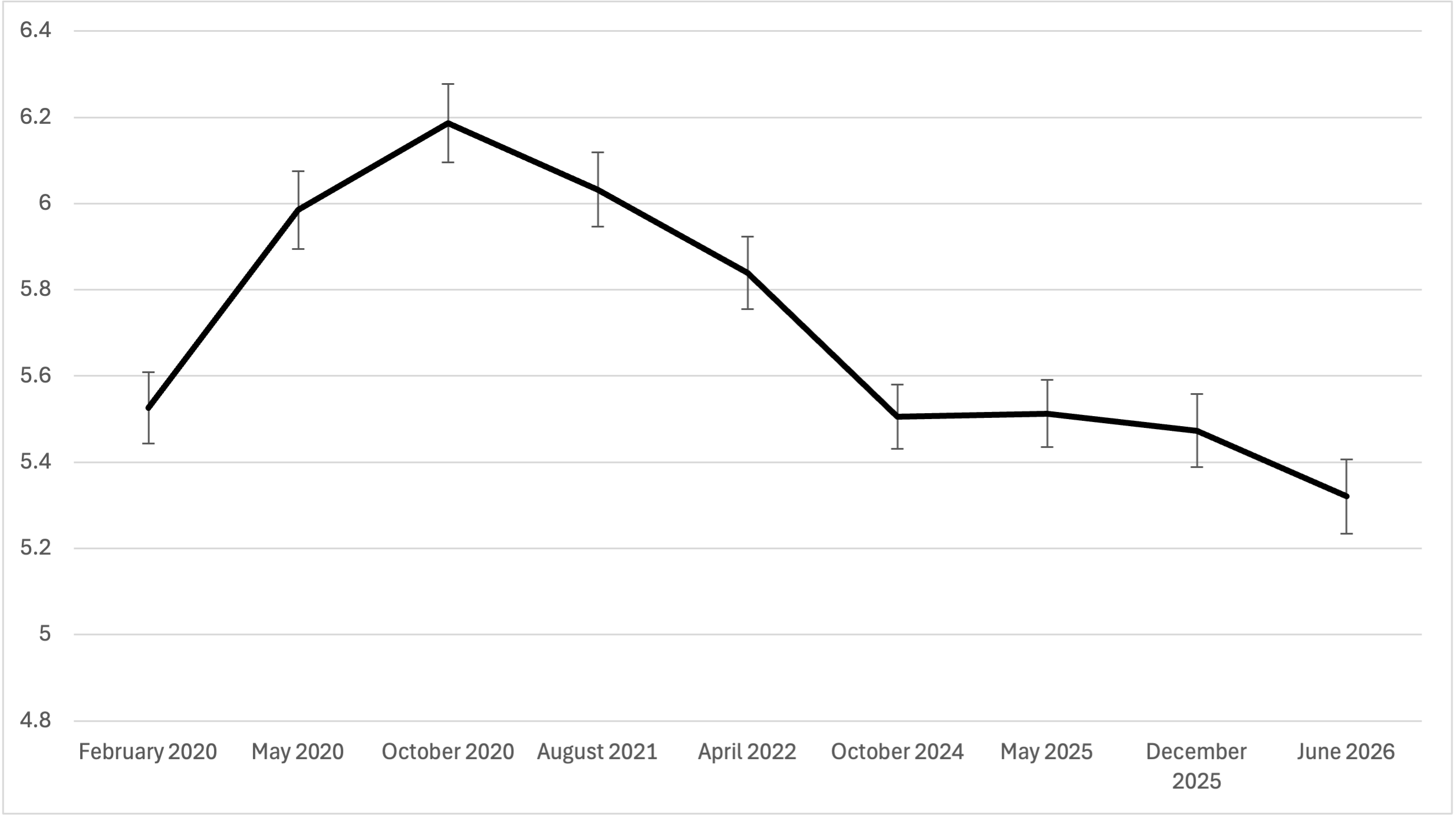
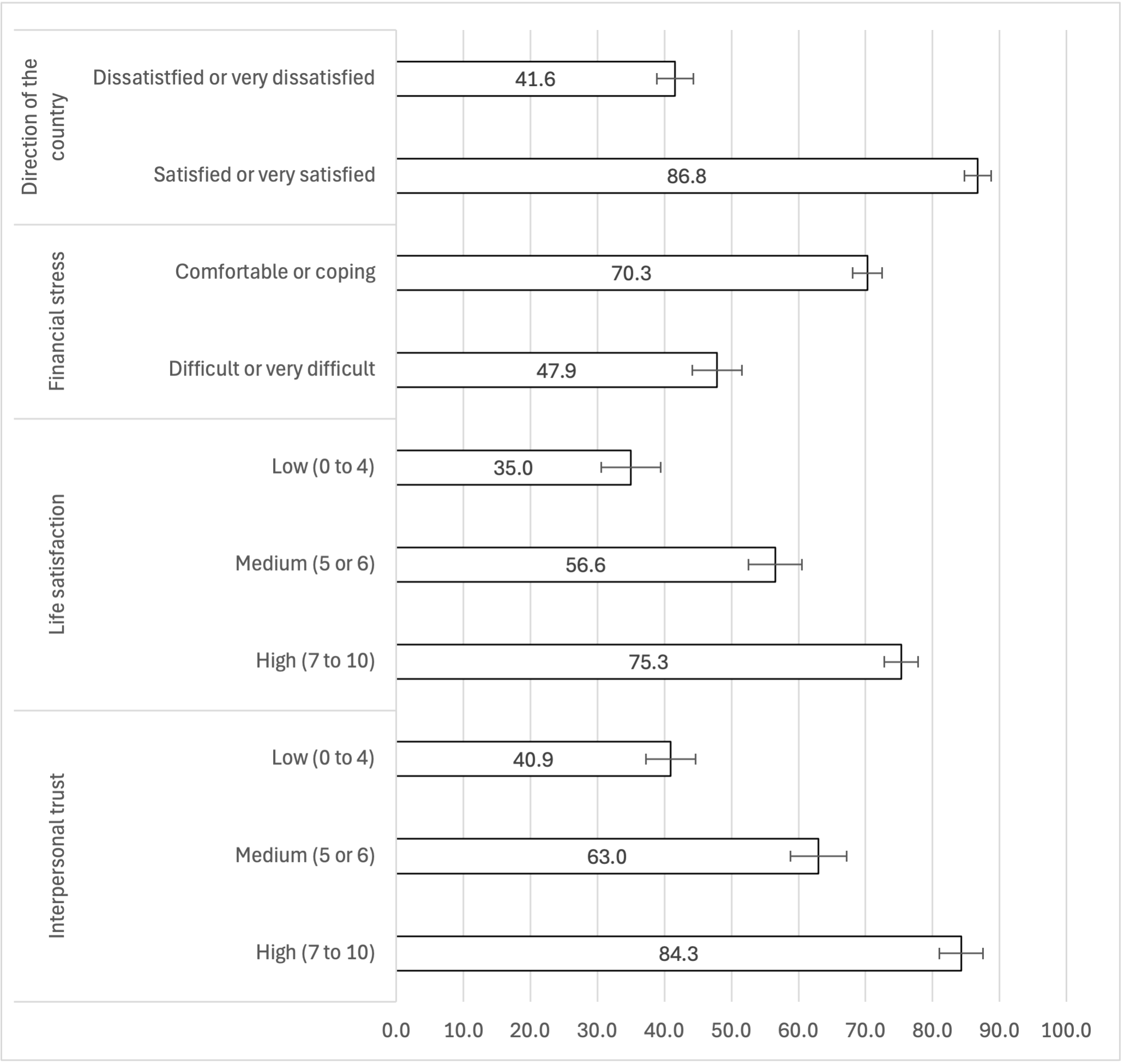
Interpersonal trust is an important signal of democratic resilience. Interpersonal trust fell to 5.32 out of 10, its lowest ANUpoll level of the 2020s and is strongly associated with satisfaction with democracy. The gap in democratic satisfaction between people with low and high interpersonal trust was 43.4 percentage points, compared with much smaller differences associated with life satisfaction and personal financial circumstances.
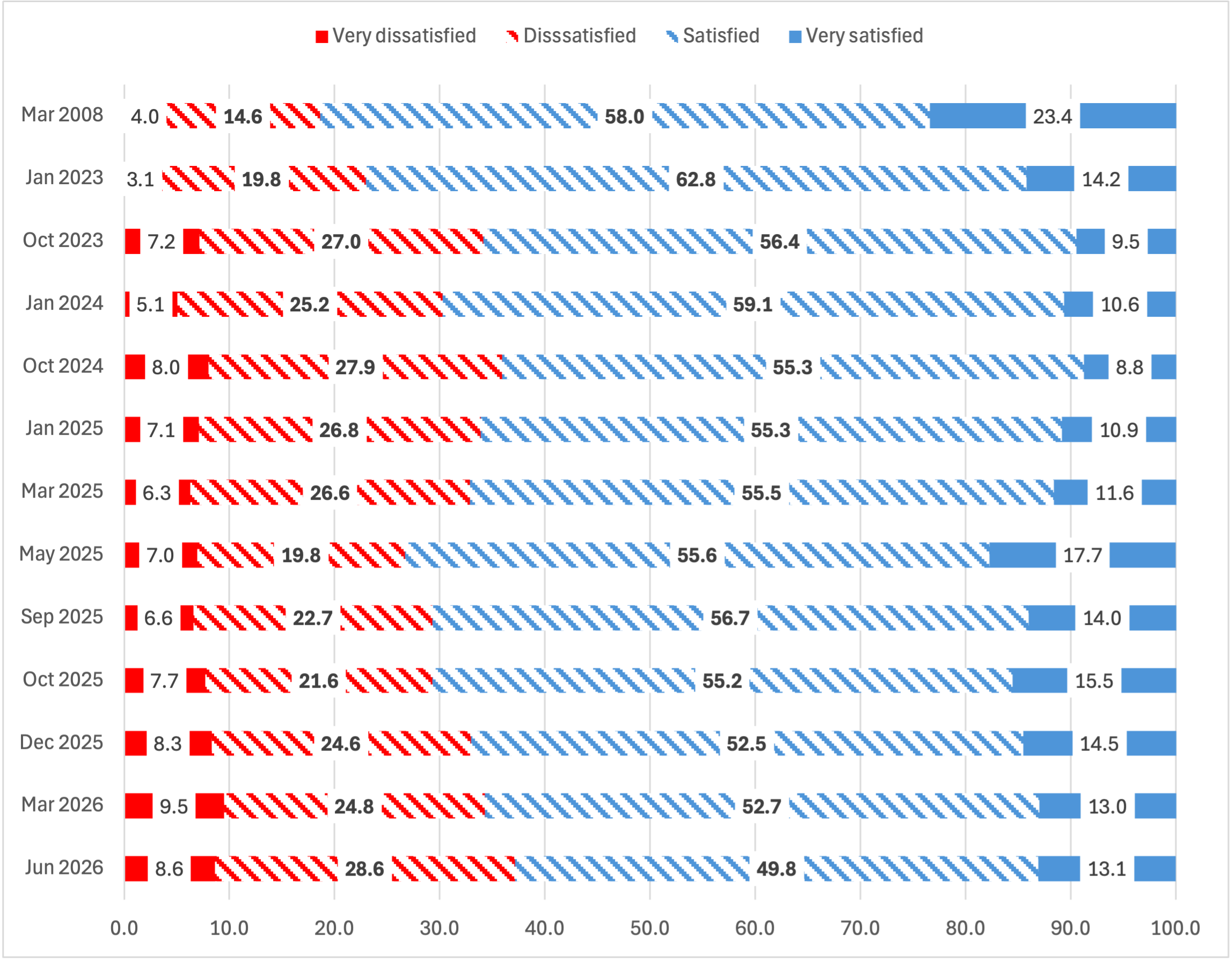
Australia’s democratic resilience is revealed through a combination of measures. Satisfaction with how democracy works fell from 65.7 to 62.8 per cent, its lowest regular reading since January 2023, while principled support for democracy increased more strongly, from 66.9 per cent in May 2025 to 72 per cent in June 2026. This divergence suggests that Australians remain committed to democracy even as they become less satisfied with how it is performing.
The next measurement frontier is to connect individual sentiment with the strength of Australia’s social networks. Existing measures tell us how people feel, whether they trust others and institutions, feel they belong, and believe they can influence decisions. However, less is known about how civic spaces and social networks are organised to sustain cooperation. Measuring people’s relationships might show whether Australians have dependable connections, whether those connect across social and political differences, and whether they endure through disagreement, disruption and crisis. Linking these relational measures with trust and democratic attitudes would provide a stronger picture of social cohesion as a collective capability, not simply an individual perception.
The data and what Australians think about their own lives and the country
The June 2026 wave of the ANUpoll was conducted with 3,543 adult Australians between 18 June and 6 July 2026. Analysis for the paper also draws on 29 prior waves stretching back to October 2019. It is the second wave of a new longitudinal cohort, with 1,851 respondents also having completed the March 2026 survey.
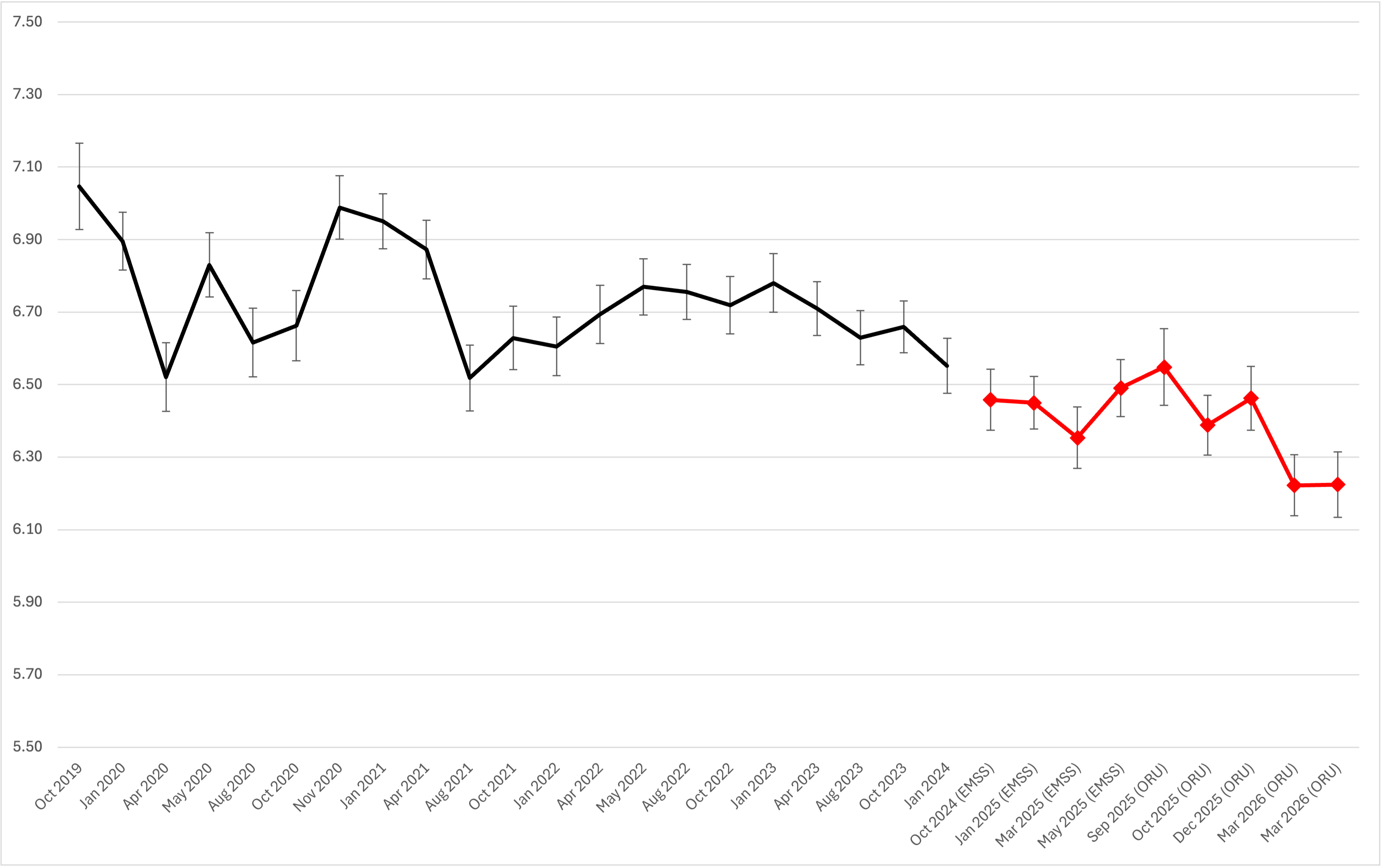
The regular tracking data from the ANUpoll shows that measures of wellbeing have been stable over the last three months, but at a low base. Respondents were asked on a scale from 0 to 10… how satisfied are you with life as a whole these days? Life satisfaction has remained steady between March and June 2026, continuing at a low value of 6.22. These March and June figures are lower than at any other time in the 2020s.
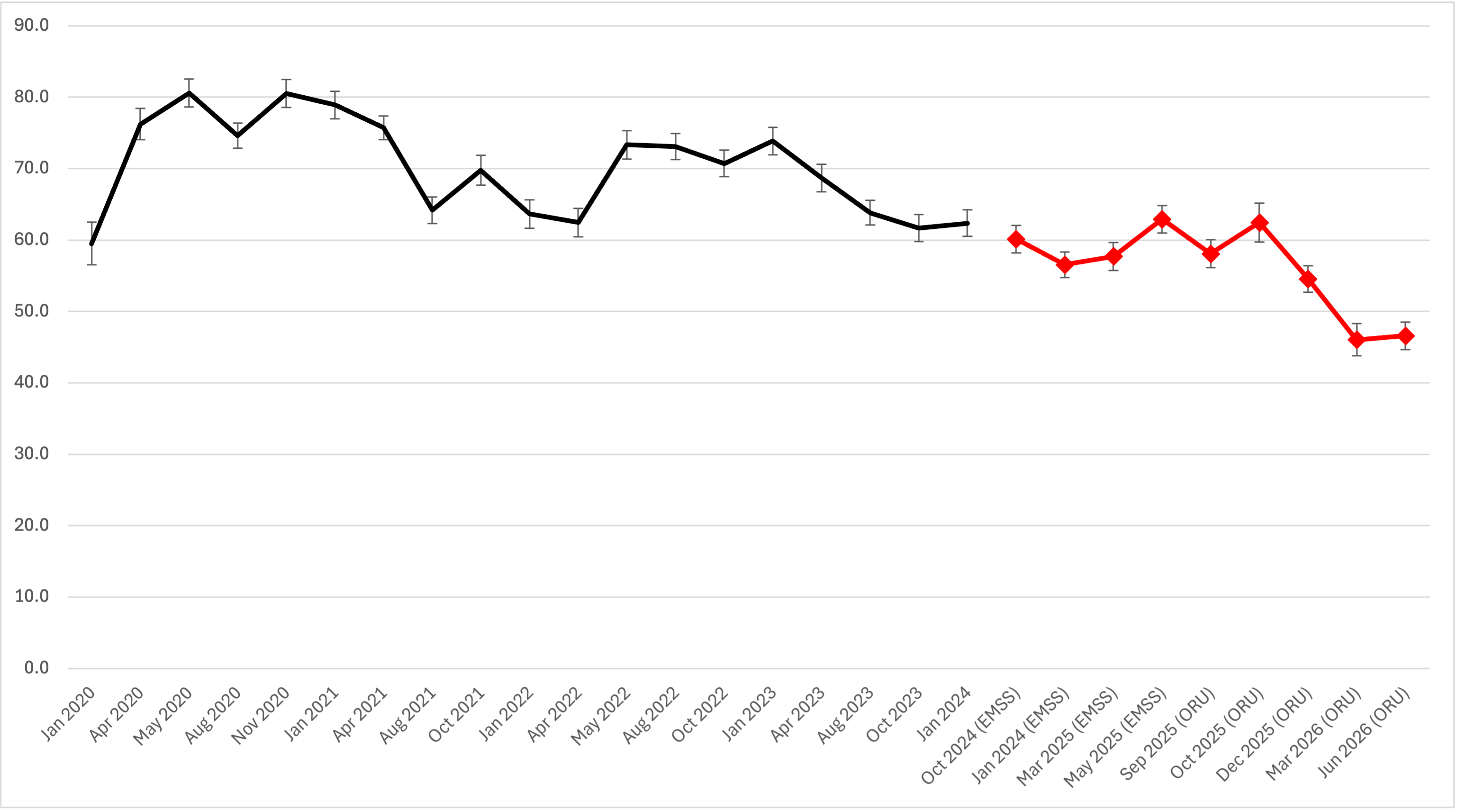
Satisfaction with direction of the country is similarly stable, but low. The ANUpoll asks All things considered, are you satisfied or dissatisfied with the way the country is heading? March and June 2026 are again the lowest months we observe over the period, and the only months since January 2020 when more people are dissatisfied than satisfied.
What do Australians think about democracy?
There was a noticeable and statistically significant drop in satisfaction with democracy between March and June 2026 (from 65.7 per cent satisfied or very satisfied to 62.8 per cent respectively). While there has been some fluctuation over the ANUpoll collection window, June 2026 is the point at which the smallest proportion of Australians are satisfied or very satisfied.
What do Australians think about other, and what are the implications?
To measure interpersonal trust in ANUpoll, the authors took the average of three measures, all on a scale of 0 to 10:
Generally speaking, would you say that most people can be trusted, or that you can’t be too careful in dealing with people?
Do you think that most people would try to take advantage of you if they got the chance, or would they try to be fair?
Would you say that most of the time people try to be helpful or that they are mostly looking out for themselves?
The average value of these three measures in June 2026 was 5.32. The previous three times these questions were asked on the ANUpoll (October 2024, May 2025 and December 2025), it was using the same methodology, including the same panel of respondents. The values over that period stayed within a reasonably narrow band of 5.47 to 5.51, which was quite similar to the pre-COVID value of 5.53. However, the June 2026 figure is the lowest recorded in ANUpoll in the 2020s.
Intuitively, it is easy to imagine why trust in a society might be important for it to function well. If you trust others in your neighbourhood, you don’t need to spend as much on security, and you are more likely to ask for a hand with small things. If a small business owner trusts other businesses, they may be less likely to require a detailed written contract, and the expensive lawyers needed. There is both cross-country analysis and more formal causal analysis that shows the economic benefits of trust in a society.
The analysis of data from June 2026 ANUpoll shows that there may be some empirical evidence that trust is vital for a resilient democracy. Even if a single survey doesn’t allow for the definitive causal claims in some of the literature, at the very least we can see that those who trust others more, are more likely to be satisfied with democracy.
Individual life satisfaction and financial stress also matters. But, when it comes to predicting satisfaction with democracy, views on the country and views on others have a much stronger relationship than individual circumstances. There is a 45.1 percentage point gap in satisfaction with democracy between those that are satisfied with the direction of the country and those that are not. Between the 34.9 per cent of Australians with low levels of interpersonal trust (values of 0 to 4) and the 31.6 per cent with relatively high levels (values of 7 to 10), there is a 43.4 percentage point gap in satisfaction with democracy.
ARDN will continue to monitor national surveys and try to synthesise and compare data released about democratic resilience in this sub-series on Democracy Data Updates. If your agency or organisation have specific questions of the data, or are looking for insights to inform specific strategies, programs or polices, please reach out to ARDN members.
Genuinely surprised to see these insights. Instinctively (and as I digest the analysis about the rise of One Nation in Australia), I would have thought personal dissatisfaction/life circumstances would be a stronger determinant of someone's faith in our democracy than their connectedness to and trust in others. Much food for thought here - would love to see further research this and how it tracks between groups of different ages, cultural backgrounds and geographies.